

The Training Workshop on the Space Technologies for Disaster Mitigation of World Heritage was held in Aba Prefecture, Sichuan province on October 13, 2020, the International Day for Disaster Risk Reduction. HIST collaborated with the Aerospace Information Research Institute of Chinese Academy of Sciences, and the Jiuzhaigou World Heritage Administration to host the workshop. Liu Jianbo, Higher Commissioner of AIR-CAS, Chen Fulong, Deputy Director of HIST, Lin Wenjing, Deputy Director of Jiuzhaigou World Heritage Administration and other leaders delivered their speeches.
Liu Jianbo said in his speech that remote sensing, navigation and other space information technologies are very important to the monitoring and protection of natural heritage, and hoped that the trainees would strengthen exchange and interaction and achieve the best learning outcomes. Chen Fulong said that it is of great significance for HIST to hold this event on the International Day for Disaster Risk Reduction, pledging that in the future HIST will continue to apply space information Training Workshop on Space Technologies for Disaster Mitigation of World Heritage Held in Sichuan Opening ceremony of the training workshop to promoting, testing and demonstrating the applications of space technologies for the conservation, management and sustainable development of globally significant natural and cultural heritage, biosphere reserves and geoparks (hereinafter called “UNESCO-designated places”). Its establishment was approved by the 35th session of the UNESCO General Conference in 2009. An agreement for the establishment of HIST was signed in June 2011 and its formal operations began in July 2011 following the finalization of all internal administrative formalities in China. HIST successfully completed its first six years (2011-2016) of operations in 2017. An evaluation was undertaken by UNESCO in December 2016. As a result, the UNESCO General Conference, at its 39th session held in Paris, France, in November 2017, decided to renew the status of HIST as a category 2 centre under the auspices of UNESCO for another 6 years from 2018 to 2023. The Jiuzhaigou Workstation, the first one established by HIST in China’s World Heritage site, aims to make full use of space information technologies to monitor and protect Jiuzhaigou and its surrounding natural and cultural heritage, and to serve the sustainable development of the regional economy and society in line with the development strategy of building a beautiful China. 05Newsletter Special Focus The World Internet Conference -Internet Development Forum was held in the water-town of Wuzhen in east China's Zhejiang Province on November 23, 2020. Themed "Digital Empowerment for a Better Future: Building a Community with a Shared Future in Cyberspace," the two-day event included two main forums, five sub-forums, an expo and other activities both online and offline. A main forum themed "Science, Technology and Innovation for Development" was jointly organized by the Chinese Academy of Sciences (CAS) and China Association for Science and Technology (CAST) to discuss the role of innovation in the development. Prof. GUO Huadong, a CAS Member, addressed the opening ceremony, saying that CAS is leading an effort to build an International Research Center of Big Data for Sustainable Development Goals to facilitate the implementation of the 2030 UN Agenda for Sustainable Development. CAS will continue to plan and launch major international science programs and projects to dive bilateral and multilateral academic exchanges for jointly building a scientific and technological innovation community and give contribution to global development, he added. At the keynote speech session,Guo made a report titled "Big Earth Data in Support of the Sustainable Development Goals (SDGs)". He introduced the Big Earth Data Science Engineering Program (CASEarth) and expounded on the role of Big Earth Data in the understanding of the Earth systems as well as the complex Human-Earth interactions. The scientific understanding will undoubtedly contribute to the realization of the SDGs, he said. GUO Huadong Expounds on Role of Big Earth Data at Internet Development Forum technology to the protection of WHS’s and strengthen the capacity building of these sites. Lin Wenjing put forward three suggestions to the participants, such as strengthening learning and communication. Speaking on behalf of the trainees, Li Xiang, Deputy Director of the Information Center of Qingchengshan-Dujiangyan Administration, said that they would cherish the opportunity, study conscientiously, and apply what they will have learned from the training workshop to their daily work by combining the theory with the practices of heritage site conservation.
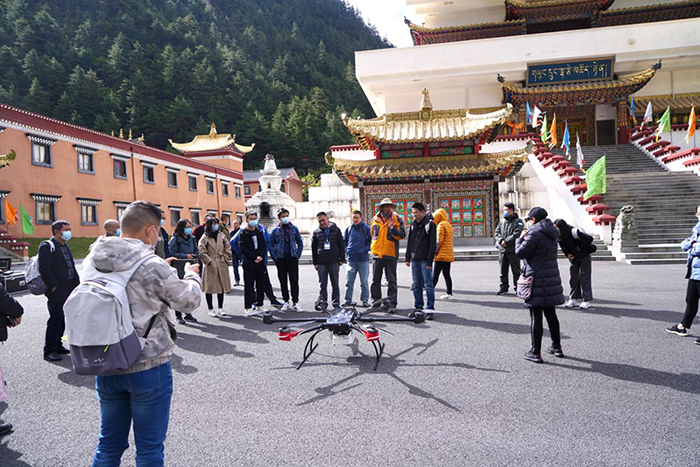
The one-week training covers practical courses such as monitoring of heritage sites and hands-on operation of unmanned aerial vehicles. Teachers are well-known experts from HIST, IRDR IPO, relevant institutes of CAS, Wuhan University and other institutions. The training has been received by about 50 participants coming from Jiuzhaigou, Huanglong, Fanjing Mountain, Sanjiangyuan, Dinghu Mountain, and Siguniang Mountain world heritage sites. This is an important initiative of HIST to implement the World Heritage Convention and China's important policies on disaster prevention and mitigation for World Heritage sites, with the aim to improve the capabilities of China's heritage sites in applying space information technology to the monitoring and protection heritage sites and serving their sustainable development.
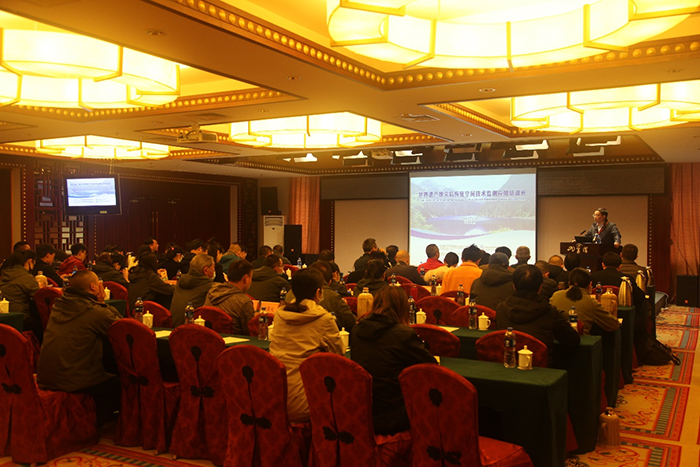
Opening ceremony of the training workshop


Copyright © 2026 International Centre on Space Technologies for Natural and Cultural Heritage under the auspices of UNESCO.
Beijing ICP Filing No. 05002788-3


